

Why GM's Cruise division is bullish despite losing $5m a day

GM CEO Mary Barra said in July that Cruise could at some point elevate $50 billion for each year
Europe-sure General Motors’s autonomous driving arm missing $500m in Q2 2022, but bosses anticipate a turnaround
Typical Motors’ imminent return to the European marketplace has renewed interest in the company on this side of the Atlantic, and is affirmation of the significant overhaul it has been through in embracing electrification above the previous number of yrs.
But amid the optimism, the very astonishing money figures posted by a single of its organizations previously this 12 months have not long gone unnoticed.
In late July, GM documented that its self-driving subsidiary Cruise experienced misplaced $500 million through the second quarter of 2022 – broadly $5 million a day. This took whole losses for the year to a hefty $900 million, up from $600 million for the similar period of time in 2021.
Execs have remained bullish during. GM CEO Mary Barra, for illustration, instructed traders in July that she even now considered that Cruise could deliver $50 billion a year in revenue from automatic auto solutions and technologies by 2030.
And there is no speedy stress for dollars, as at the time the losses have been uncovered, Cruise was described to have $3.7 billion at its disposal and $5 billion credit history from GM to obtain autonomous Origin EVs (although this income will run out in approximately two decades if losses keep on at the same level).
It is abundantly obvious, while, that Cruise is at a vital juncture and requirements to get started building some tangible development. And in modern months, there has eventually been some concrete proof that it is executing so. The very first substantial action arrived in late June, when it was granted a allow to demand for driverless rides in its autonomous Chevrolet Bolt cabs in San Francisco.
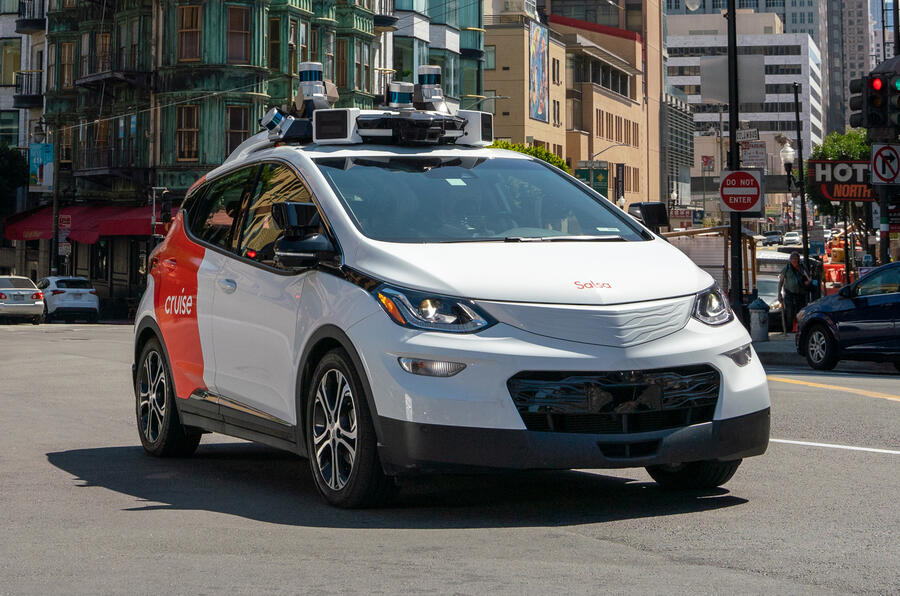
Commercialised self-driving robotaxi solutions have been a key concentrate on for autonomous motor vehicle (AV) corporations for some time, and by getting its licence to work, Cruise grew to become the 1st to be authorized to do so in a central area of a main US metropolis, beating rival Waymo – owned by Google parent Alphabet – to the punch. Though Waymo experienced supplied fared driverless rides in Phoenix, Arizona, for some time beforehand, it experienced been in quieter suburban regions.
While Cruise’s San Francisco roll-out has not been without its hitches – reviews of robotaxis blocking website traffic owing to application glitches have attracted some unhelpful publicity – it has served a function. In September, at a Goldman Sachs conference, Cruise CEO Kyle Vogt introduced that very similar operations would commence in Phoenix and Austin, Texas, by the stop of the 12 months.
And he took fantastic satisfaction in pointing out: “It took us 33 months to get all the permits needed for industrial procedure in California. And I imagine alongside that way, we constructed a lot of trustworthiness and trust… for the reason that to get the permits for our subsequent metropolis, it took 3 months.” The concept was clear if approval to function in other towns can be attained this promptly, we can anticipate to see a rapid increase in the number of robotaxis in the very in close proximity to foreseeable future.
Of extra significance to the base line, nevertheless, will be Cruise’s goal-constructed AV, the Origin, coming into creation in 2023. At the exact same meeting, Vogt claimed: “Next 12 months, issues get seriously interesting on the development side. There’s heading to be hundreds of AVs rolling out of Standard Motors crops, together with the to start with Origins. And we’ll be making use of these to mild up in many far more markets and to begin to generate significant profits in those marketplaces.”
One of individuals markets is Dubai – the to start with city in which Cruise will operate outside the US – where by digital mapping of the streets is underneath way, in preparation for an Origin robotaxi provider to launch in 2023. With Dubai focusing on 25% of journeys to be in automated transportation by 2030, Cruise’s head start out there will present it with an obvious option.
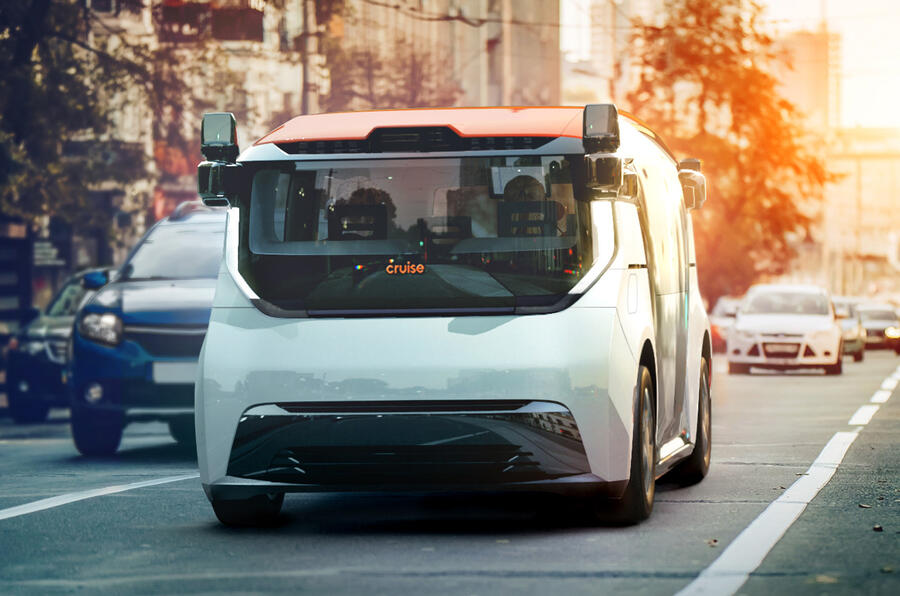
In the slightly for a longer period term, Vogt also specific options for personalized AV ownership to be practical by 2025, by which time the Origin will be readily available with pc chips developed by Cruise itself, somewhat than purchased in – a shift intended to lower expenditures that should really make the automobile extra reasonably priced for consumers.
It is plain, then, that issues are transferring in the right way. But there are still some who think that the faith staying demonstrated in AVs – as GM is exhibiting with Cruise – demands additional quick vindication.
This perspective was neatly summed up by Mike Wagner, CEO of US autonomous vehicle hazard management enterprise Edge Circumstance Investigation, who instructed Reuters in September: “If these providers really don’t realize success over the up coming two many years, they are not heading to exist any far more. It is a case of place up or shut up at this place.”
Cruise, although, is self-assured. According to Vogt: “The final 8 a long time have been this R&D stage you’ve obtained to get the technology to get the job done in advance of you can scale it. And we cross[ed] that critical inflection level when we did our initially driverless deployment in a main urban market place.”
The field will locate out very soon if GM’s patient ready match is likely to spend off.
Regulating and arranging for autonomous vehicles
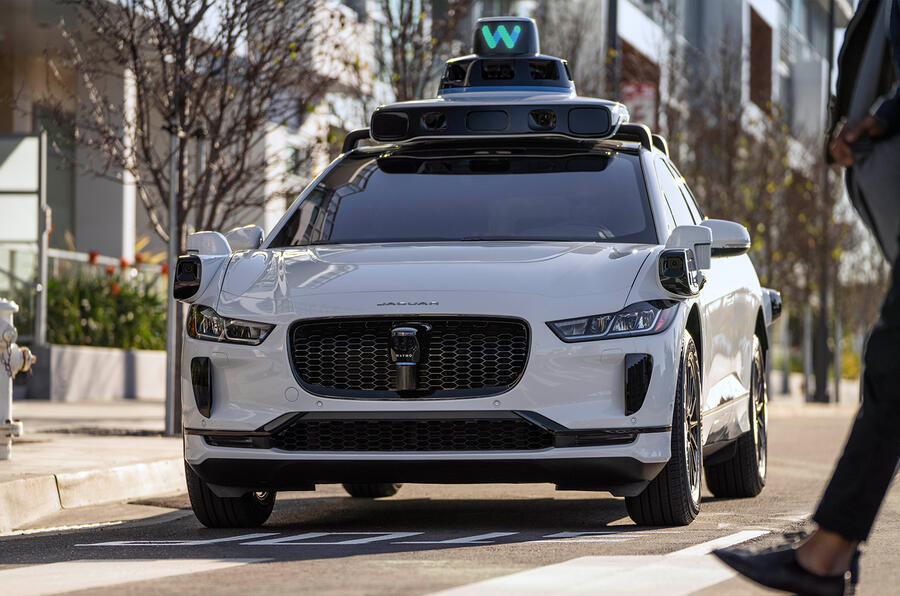
The reality it took Cruise 33 months to attain the necessary permits to commercialise driverless robotaxi operations in San Francisco demonstrates how regulation of autonomous tech can show a difficult hurdle for operators and makers to negotiate.
In the US, there are signals that things may well be easing in this regard. Waymo can now run its Jaguar I-Pace robotaxi without a driver in downtown Phoenix to vetted riders, while Boston-centered Motional expects to get a allow to give its driverless Hyundai Ioniq 5 robotaxi by means of experience-hailing company Lyft in Las Vegas next 12 months. Cruise’s practical experience in Phoenix and Austin indicates other metropolitan areas may possibly occur on board additional rapidly after the tech is established in other places.
In conditions of cars that can in fact be bought, the policies are established condition by point out. Mercedes, for illustration, hopes to have permission to supply its Generate Pilot tech in California and Nevada by late 2022-early 2023.
Authorities in Asia, in the meantime, are getting a far more proactive approach, with some Chinese cities establishing regulatory frameworks for AVs, and certain targets currently being place in put. South Korea’s transport ministry, for case in point, recently explained it hoped around half of the new products launched regionally by 2035 would be fully autonomous.
Graham Hope